PIONEER ROAD
Genre Historical non-fiction book manuscript. 330 pages, 62,801 words, innumerable never-before-published archival black and white photos.
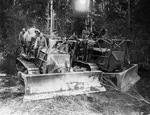
Notes This is a compilation of short vignettes and photos--the human interest stories--derived from interviews with over 200 men and women (mostly men), both army and civilian, who were directly involved in different capacities in the building of the Alaska Highway during the war effort in 1942. There are short simple descriptions of everyday life in the constantly moving camps, tearful recollections of tragedy, conditions of hardship endured by men proud to serve their country during time of war, and funny uplifting stories which warm the heart. I have literally hundreds of early 1940's black and white photos (including entire photo albums) depicting every conceivable portion of what it took to build the Highway.
Short Description December, 1941. US officials fear Japanese invasion in Alaska. The north must be defended. How? Build a road linking Alaska to the United States in the least possible time. True stories/archival photos of those pioneers, military and civilian, who, against great odds, built the Alaska Highway. It is a testament not only to themselves, but also to humanity's endearment to completion, for this pioneer road--this "impossible road" as it was known--would later be called the "Greatest Highway On Earth."
Synopsis December, 1941. Japanese forces bomb Pearl Harbor. The United States is drawn, fully, into World War II.
Though a few military bases exist in the north, Alaska, Canada, and the entire west coast of the U. S., lie vulnerable to attack and invasion by the Japanese. It is debateable whether or not the Navy can keep northern sea lanes open and enemy-free. A better way is needed to defend the north. What can be done?
Build a road--a road through some the wildest, most remote and severe weather areas in North America. There are those who think it impossible. Now, the bombing of Pearl Harbor and the expected, almost certain attack on Alaska, prompts quick action.
1942--A master plan between Canada and the United States is initiated and the order to start work on the Alcan Highway Project becomes reality. The road itself will stretch over 1,400 miles, beginning in Dawson Creek, British Columbia, Canada, and ending in Delta Junction, Alaska. Time is the key--the best way in the shortest amount of time--an enormous undertaking, a huge war effort. U.S. Army Engineer troops mobilize. Sent north to blaze a pioneer road through untamed wilderness, across raging rivers, mountains, mud, mosquitoes and muskeg, they face imposing odds.
With the Japanese occupation of Alaska's Aleutian Islands (Attu and Kiska) pressure becomes intense. The enemy has breached North America! More manpower will be needed if the project is to be finished in the shortest time possible. With the military leading the way, punching through the initial road, others are called in to help. Over the course of the next few months and throughout the duration of the war, civilian contractors working with the Public Roads Administration, build permanent bridges and begin widening and improving the original road punched through by the military.
Bob Hope organizes a troupe of entertainers, beginning the first of many USO show appearances, and at one short refueling stop at Northway Air Base in Northway, Alaska, he steps off his plane into frigid, sub-zero temperatures, climbs onto a nearby tree stump and begins an impromptu show for those at the remote airbase.
Civilian and military alike, fight hordes of mosquitoes, battle extreme cold and fatigue, and endure hardships not found in any other part of World War II.
But they do endure; they do finish, and they do it quickly because this is war. Proud to serve their country in any capacity, they put their heart and soul into the effort.
Excerpts from the book
"I saw only one woman in the 11 months I was up there...."
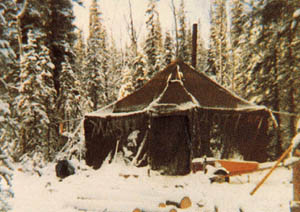
"The kitchen was a wall tent, like the ones we lived in and the cook stoves were kerosene-fired. Once in a while we would have pancakes for breakfast. The cooks did a real good job, but they had to mix the pancake batter in big twenty-gallon aluminum pots, using a boat oar to stir it. After they filled the griddle, the pot, near empty, sat for a few minutes before they mixed more batter. You could see, in the leftover batter, what looked like black pepper, and the cooks would grab an oar and stir it up again, mixing more batter in with the old. So what's the problem with that? The pepper wasn't pepper....it was mosquitoes...."
"Fifty years later, would I do it all again? Chances are, I would." Those who participated in this most unusual World War II effort still have an immense pride in their accomplishment. One man summed it up this way: "So...would I do it again? Without hesitation!"